Can Potassium Help Lower Blood Pressure? Foods That Support a Healthy Heart
High blood pressure can develop quietly, often without obvious symptoms. While regular blood pressure checks are important, what you put on your plate may also play a role in supporting healthy blood pressure.
One nutrient that deserves more attention is potassium.
Why Is Potassium Important for Blood Pressure?
Potassium is an essential mineral that helps your body function properly. One of its important roles is helping balance the effects of sodium in your diet.
Eating too much sodium can contribute to higher blood pressure in some people. Getting adequate potassium from food can help the body remove more sodium through urine and can support healthy blood vessel function.
That doesn’t mean eating a banana will instantly lower your blood pressure. Instead, potassium-rich foods can be part of an overall heart-healthy eating pattern.
7 Potassium-Rich Foods to Add to Your Diet
You may be surprised by how many everyday foods contain potassium:
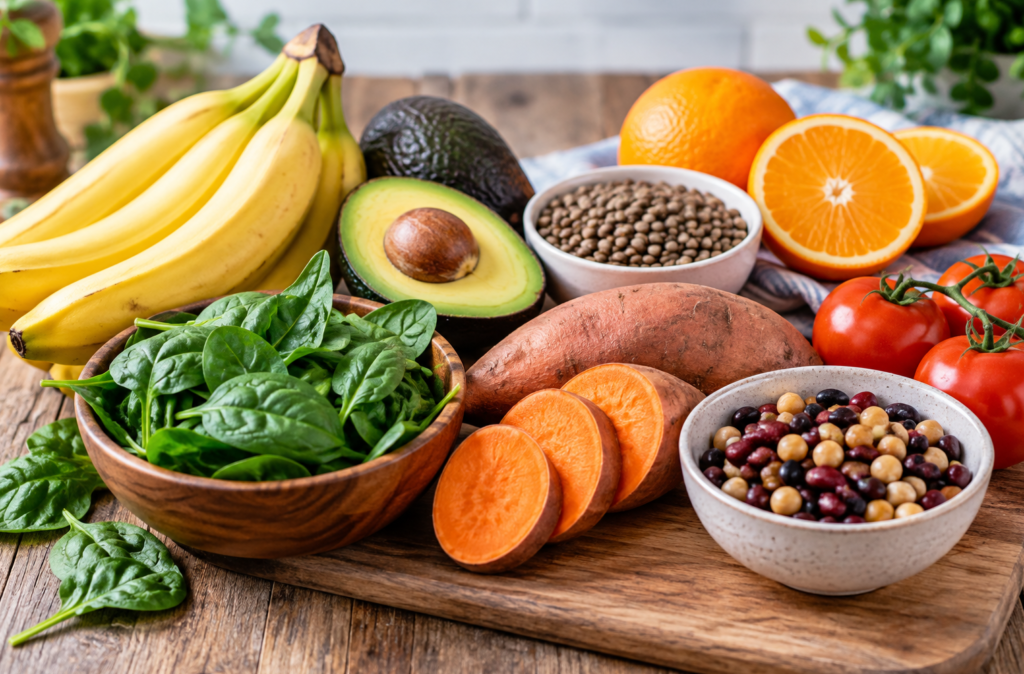
- Bananas – An easy snack and one of the best-known sources of potassium.
- Avocados – Packed with potassium, fiber, and heart-healthy unsaturated fats.
- Sweet potatoes – A nutritious source of potassium that also provides fiber and vitamins.
- Spinach and leafy greens – An easy addition to salads, smoothies, omelets, and cooked meals.
- Beans and lentils – Excellent sources of potassium, fiber, and plant-based protein.
- Tomatoes – Fresh tomatoes and lower-sodium tomato products can contribute potassium to your diet.
- Oranges – Provide potassium along with vitamin C and other nutrients.
Don’t Forget About Sodium
Adding potassium-rich foods is only part of the picture. Reducing excess sodium can also help support healthy blood pressure.
Pay attention to packaged foods, processed meats, canned soups, sauces, fast food, and salty snacks. Checking nutrition labels can help you spot foods that contain more sodium than you might expect.
A diet emphasizing fruits, vegetables, whole grains, beans, nuts, and other minimally processed foods is generally a better approach than relying on one particular “blood pressure food.”
How Often Should You Check Your Blood Pressure?
High blood pressure often has no noticeable symptoms, which is why checking it matters.
If you haven’t had your blood pressure checked recently—or you’ve been getting higher-than-normal readings—consider having it measured by a healthcare professional.
One elevated reading doesn’t necessarily mean you have hypertension. Healthcare professionals often look at repeated measurements and other health factors before determining what the readings mean.
A Word of Caution About Potassium
More potassium isn’t appropriate for everyone.
People with kidney disease or certain medical conditions, as well as people taking medications that affect potassium levels, may need to limit potassium. Talk with a healthcare professional before making major dietary changes or taking potassium supplements.
Know Your Numbers at Urgent Care of Coastal Georgia
Healthy habits can make a difference, but knowing your blood pressure numbers is an important first step.
At Urgent Care of Coastal Georgia in St. Marys, GA, our healthcare team can check your blood pressure and help you understand what your numbers mean.
Don’t wait until you feel something is wrong. Know your numbers and take an active role in your health.