How to Relieve Stress at Work
Feeling Stressed at Work? 8 Simple Ways to Reset Your Mind and Protect Your Health
Your Workday Shouldn’t Leave You Feeling Worn Down
Deadlines. Emails. Meetings. Phone calls. A growing to-do list.
For many people, stress has simply become part of the workday. A little stress from time to time is normal, but when you spend day after day feeling overwhelmed, tense, or exhausted, your body may begin to feel the effects too.
According to the CDC, long-term stress can contribute to problems with sleep, concentration, energy, appetite, headaches, body aches, stomach problems, and worsening of existing health conditions.
The good news? You don’t necessarily need an hour-long yoga class or a vacation to start feeling better. Small breaks and healthy habits throughout your workday can make a meaningful difference.
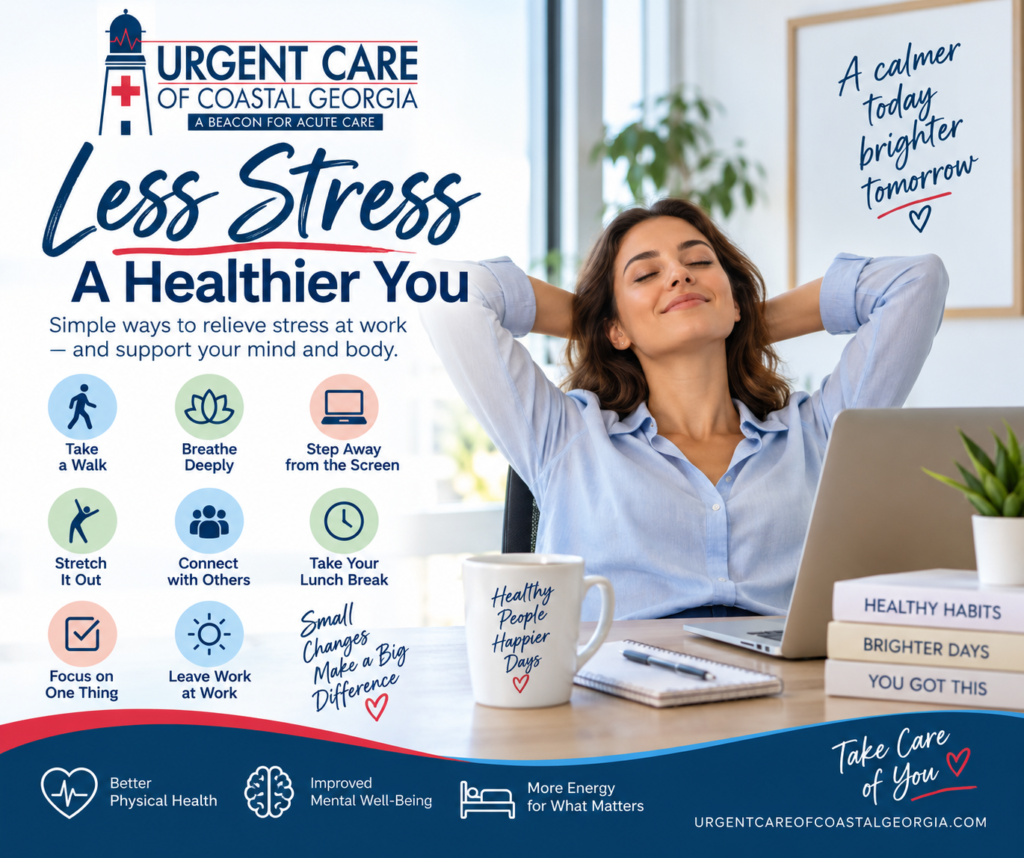
Here are eight simple ideas you can try.
1. Take the 5-Minute Walk
When work starts feeling overwhelming, get up.
Walk around the office. Walk outside. Take the stairs. Even a short break gives you an opportunity to mentally disconnect from whatever has been consuming your attention.
Regular physical activity can help relieve stress and tension while improving mood, energy, sleep, and overall cardiovascular health.
Try this: Instead of spending your entire lunch break looking at your phone, spend five or ten minutes walking outside.
Your body—and probably your brain—will appreciate it.
2. Try a 60-Second Breathing Reset
You don’t need special equipment to give yourself a quick mental reset.
Sit comfortably, relax your shoulders, slowly breathe in through your nose, and then slowly breathe out. Focus entirely on your breathing for about a minute.
Deep breathing can help activate your body’s relaxation response and may help you feel calmer when you’re under pressure.
Think of it as a mini reset button you can use almost anywhere.
3. Step Away From the Screen
Sometimes the best thing you can do for productivity is stop trying to be productive for a few minutes.
Stand up.
Stretch.
Look outside.
Get some water.
Talk to a coworker.
The CDC specifically recommends taking breaks during a work shift to rest, stretch, or connect with supportive coworkers, friends, and family as a healthy way of coping with workplace stress.
Five minutes away from your computer isn’t necessarily wasted time. You may return feeling refreshed and better able to concentrate.
4. Stretch Your Neck, Shoulders, and Back
Have you ever finished a stressful day and suddenly realized your shoulders have been practically touching your ears?
Stress and hours spent sitting at a desk can leave your body feeling tight and uncomfortable.
Every hour or two, take a moment to:
- Roll your shoulders backward.
- Gently stretch your neck.
- Stand and stretch your back.
- Move your wrists and hands.
- Walk around for a few minutes.
Movement doesn’t have to mean a full workout. The goal is simply to avoid staying tense and stationary all day.
5. Have a Conversation That Has Nothing to Do With Work
We’re human beings—not machines designed to answer emails.
Take a few minutes to talk with someone you enjoy.
Ask a coworker about their weekend. Call your spouse during lunch. Text a friend. Share a laugh.
Social connection can be an important part of emotional well-being, and taking a brief social break may help interrupt a stressful day.
Sometimes five minutes of laughter is exactly what you needed.
6. Stop Trying to Do Everything at Once
You have 14 browser tabs open.
Your phone is buzzing.
An email just arrived.
Someone wants to talk to you.
And somehow you’re trying to finish three different projects simultaneously.
Sound familiar?
When everything feels urgent, stop and ask yourself:
“What is the ONE thing I need to finish next?”
Write it down.
Complete it.
Then move to the next task.
Reducing distractions and creating a clear order for your work can make an overwhelming workload feel much more manageable.
7. Take Your Lunch Break Seriously
Lunch shouldn’t always mean eating at your desk while answering emails.
When possible, physically leave your workspace.
Eat somewhere different. Go outside. Talk with coworkers. Take a short walk. Put your phone down for a few minutes.
Your brain needs periods when it isn’t constantly processing work-related information.
Giving yourself permission to actually take a break can help you return to work feeling more refreshed.
8. Leave Work at Work
This one can be difficult.
You leave the office—but the office comes home with you.
Emails during dinner. Messages before bed. Thinking about tomorrow’s meeting while trying to fall asleep.
Creating boundaries between work and personal time can give your mind and body an opportunity to recover. The American Heart Association notes that disconnecting after work can support stress management, sleep quality, mental clarity, social connection, and heart health.
Try establishing a simple rule:
When the workday ends, give yourself permission to be done.
Tomorrow’s problems can wait until tomorrow.
Why Managing Stress Is Good for Your Health
Reducing stress isn’t just about feeling happier at work.
Chronic stress keeps your body in a heightened state of alert. Over time, it may affect sleep, mood, energy levels, blood pressure, and other aspects of your physical and emotional health.
Healthy stress-management habits such as regular movement, sufficient sleep, relaxation techniques, time outdoors, and maintaining strong social connections can support both physical and mental well-being.
And here’s something important to remember:
Taking a break isn’t being lazy. Taking care of yourself helps you keep going.
When Stress Starts Feeling Physical
Sometimes what seems like “just stress” begins showing up physically.
You might experience headaches, muscle tension or body aches, difficulty sleeping, fatigue, stomach problems, or trouble concentrating.
While these symptoms can occur with stress, you shouldn’t automatically assume stress is the cause—especially if symptoms are new, severe, persistent, or getting worse.
That’s where getting evaluated by a healthcare professional can be important.
Feeling Unwell? Urgent Care of Coastal Georgia Is Here for You
If stress, exhaustion, or a demanding work schedule has you feeling physically unwell, don’t ignore what your body is telling you.
At Urgent Care of Coastal Georgia, we’re here to help evaluate non-emergency illnesses, symptoms, and health concerns when you need convenient medical care.
Whether you’re dealing with a persistent headache, fatigue, body aches, stomach discomfort, or another concern that’s interfering with your day, our healthcare team can evaluate your symptoms and help determine the appropriate next steps.
Your health shouldn’t always be the last item on your to-do list.
Take the walk.
Take the lunch break.
Take the deep breath.
And when something doesn’t feel right, take the time to get checked.
Urgent Care of Coastal Georgia — convenient care when you need it.
This article is for general educational purposes and is not a substitute for professional medical advice. Seek emergency medical attention for severe or potentially life-threatening symptoms.