Tick Bites in Coastal Georgia: When Should You See a Doctor?
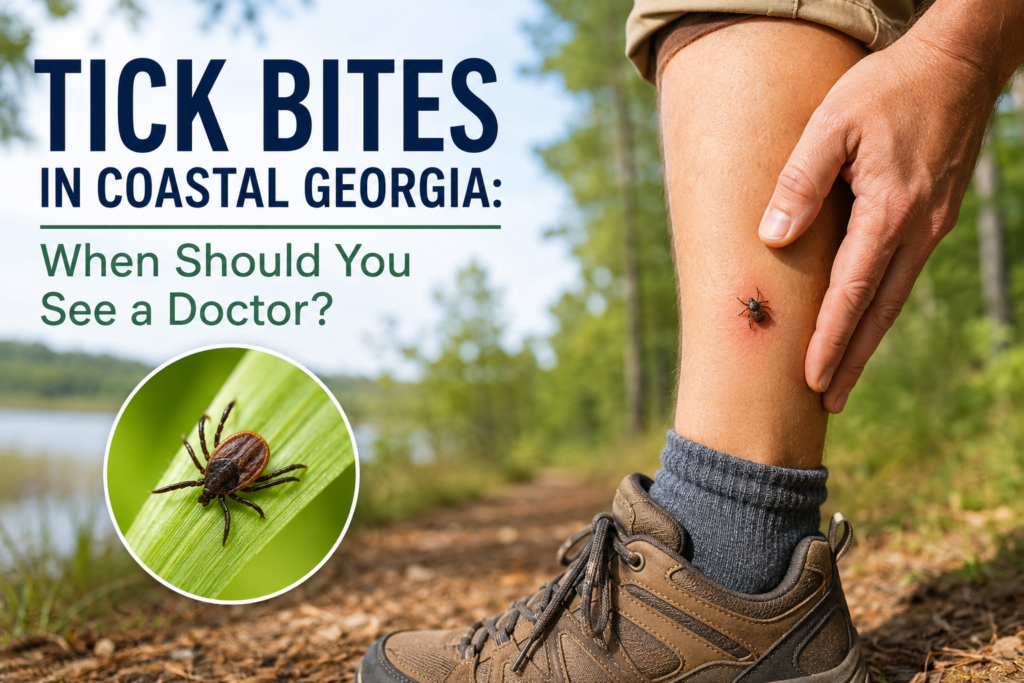
Living in Coastal Georgia means enjoying beautiful parks, trails, beaches, and outdoor activities year-round. Unfortunately, it also means sharing the outdoors with ticks. While many tick bites are harmless, some can transmit illnesses that require prompt medical attention. Knowing what to do after a tick bite can help protect your health and your family’s well-being.
At Urgent Care of Coastal Georgia, we provide fast, walk-in evaluation and treatment for tick bites, skin infections, rashes, and other minor medical concerns. If you’re unsure whether a tick bite needs medical care, our experienced providers are here to help.
Where Are Ticks Common in Coastal Georgia?
Ticks thrive in areas with tall grass, wooded trails, shrubs, and leaf litter. In Camden County and throughout Coastal Georgia, you may encounter ticks while:
- Hiking local trails
- Working in your yard
- Camping
- Fishing or hunting
- Walking your dog
- Spending time in parks or wooded areas
Checking yourself, your children, and your pets after spending time outdoors is one of the best ways to prevent tick-borne illnesses.
How to Safely Remove a Tick
If you discover a tick attached to your skin:
- Use clean, fine-tipped tweezers.
- Grasp the tick as close to the skin as possible.
- Pull upward slowly and steadily without twisting.
- Clean the bite area with soap and water or rubbing alcohol.
- Wash your hands thoroughly.
Avoid home remedies such as petroleum jelly, nail polish, matches, or heat. These methods may increase the risk of infection or cause the tick to release more saliva into the bite.
What Symptoms Should You Watch For?
Most tick bites cause only mild irritation. However, monitor the bite and your overall health for several weeks. Seek medical evaluation if you experience:
- Fever or chills
- Fatigue
- Headache
- Muscle or joint pain
- Rash near the bite or elsewhere on your body
- Swollen lymph nodes
- Increasing redness, swelling, or drainage around the bite
- Difficulty breathing or signs of an allergic reaction
Early diagnosis and treatment can significantly reduce the risk of complications from tick-borne illnesses.
When Should You Visit Urgent Care?
You should consider visiting Urgent Care of Coastal Georgia if:
- You cannot safely remove the tick.
- Part of the tick remains embedded in your skin.
- The bite becomes red, swollen, painful, or begins draining.
- You develop a rash, fever, body aches, or flu-like symptoms.
- You are concerned about possible exposure to a tick-borne disease.
- You have multiple tick bites or underlying health conditions that increase your risk of infection.
Our medical team can evaluate your symptoms, determine whether additional testing or treatment is appropriate, and provide guidance for recovery.
Tips to Prevent Tick Bites
Simple precautions can greatly reduce your risk:
- Wear long sleeves and long pants when hiking or working outdoors.
- Use an EPA-registered insect repellent.
- Stay on cleared trails whenever possible.
- Perform full-body tick checks after outdoor activities.
- Shower soon after coming indoors.
- Keep your lawn trimmed and remove leaf litter around your home.
- Use veterinarian-recommended tick prevention products for pets.
Walk-In Tick Bite Care in St. Marys, GA
If you’ve been bitten by a tick or are experiencing symptoms after spending time outdoors, don’t wait for your condition to worsen. Urgent Care of Coastal Georgia offers convenient walk-in medical care with experienced providers who can evaluate tick bites, treat infections, and help you get back to enjoying the outdoors safely.
Whether you’re a local resident or visiting Coastal Georgia, we’re here when you need prompt, compassionate care.
Need treatment today? Visit Urgent Care of Coastal Georgia in St. Marys, Georgia, for fast, professional walk-in care—no appointment necessary.